


Martingale Collars
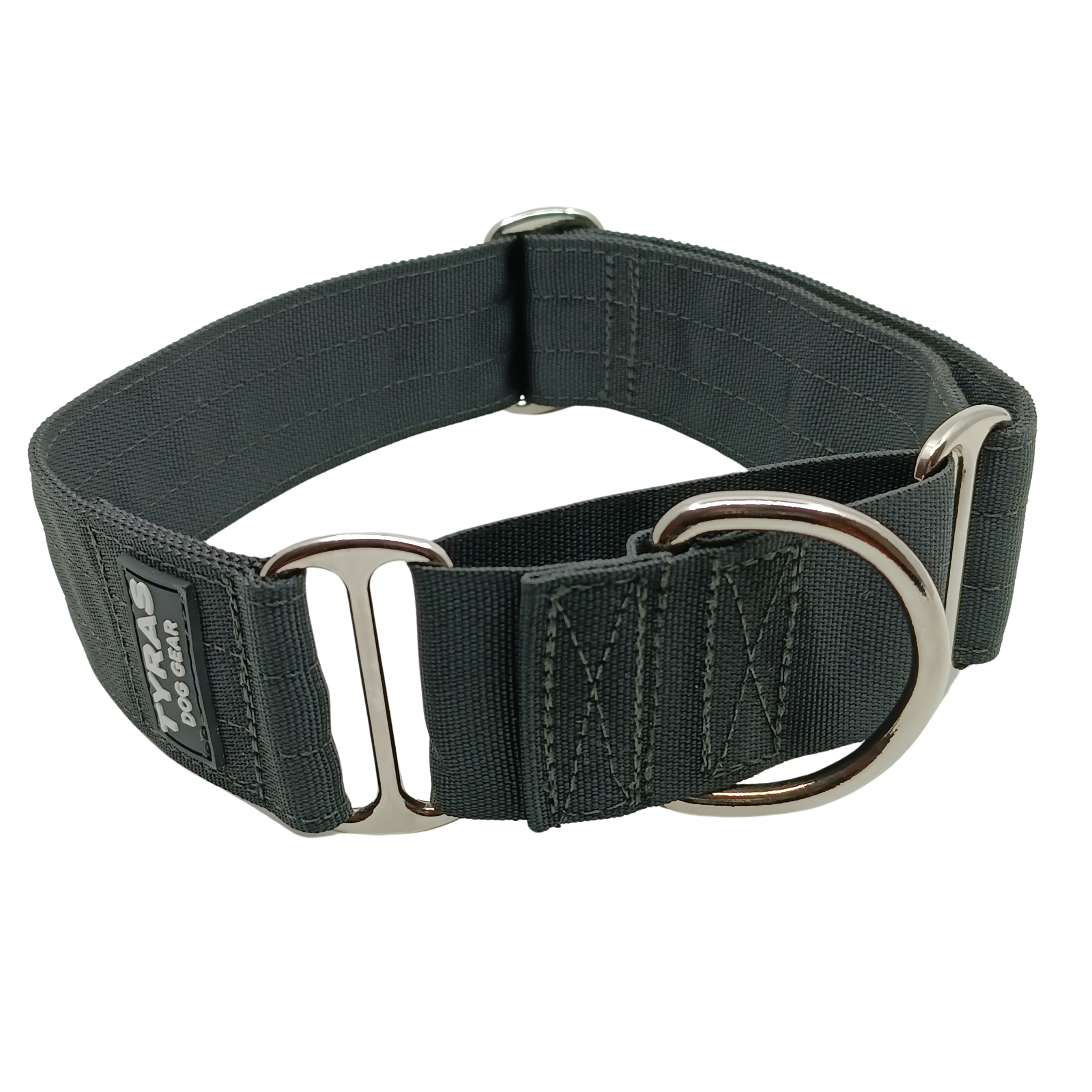
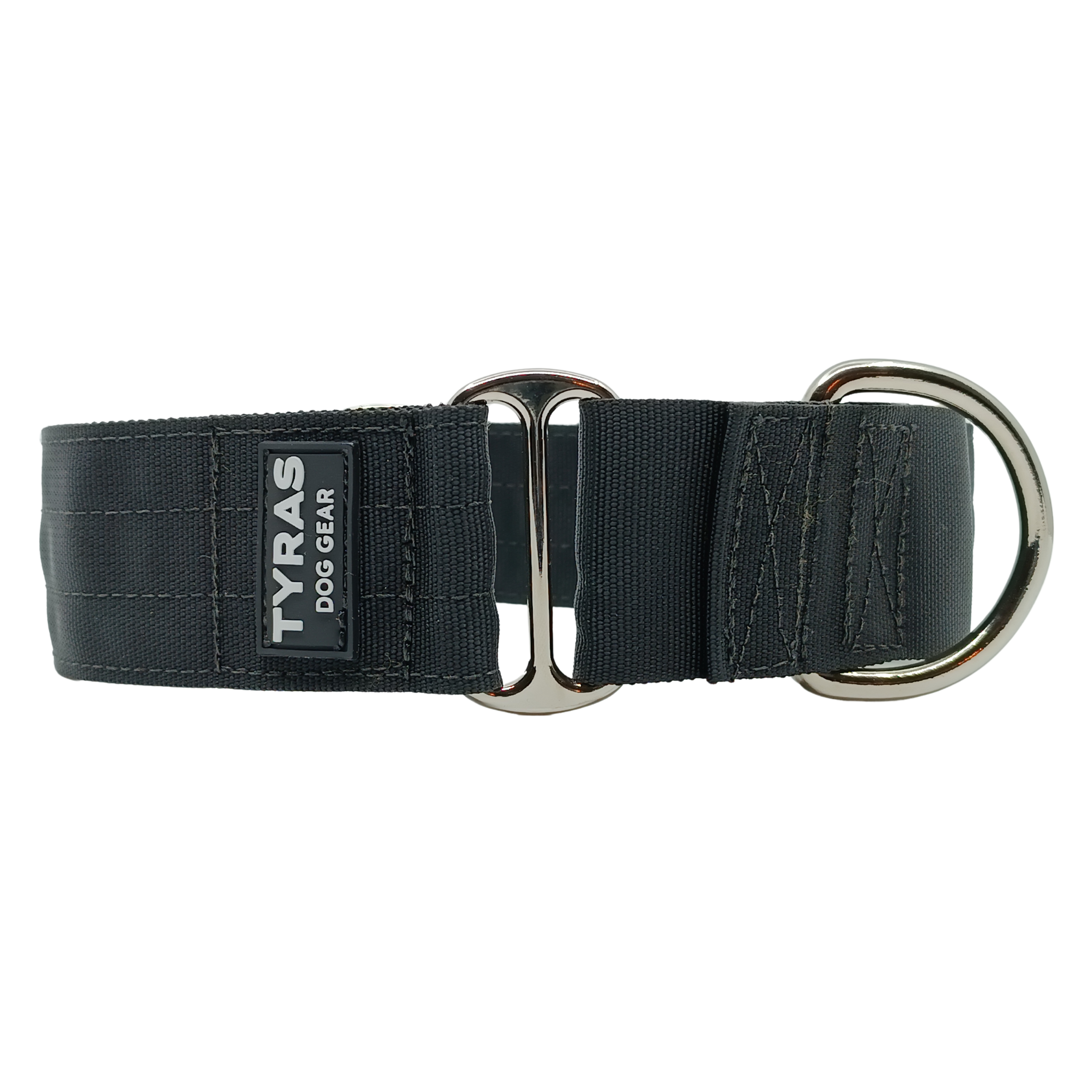
For everyday use and leisure. Martingale collars with functional design and rugged construction – comfortable to wear, built for medium to large dogs. A reliable choice for active days or as a comfortable collar for home.
5 products


DISCOVER MORE CATEGORIES

Safety without Choking
Why Choose a Martingale & Half-Choke Collar from TYRAS Dog Gear?
The Martingale collar – often known as a limited-slip or half-choke collar – is one of the most reliable designs for an active daily routine with a dog. Originally developed to prevent narrow-headed breeds from slipping out, dog handlers today universally value this system for its combination of escape-proof security and a loose fit when at rest. At TYRAS Dog Gear, we manufacture these Martingales as no-nonsense, durable tools that combine handcrafted precision with maximum practical utility under demanding conditions.
All of our Martingale models operate with a mechanically precisely defined stop. When tension is applied to the leash, the collar closes only to a specific, predetermined point. Any attempt by the dog to back out during moments of panic or sudden changes in direction is rendered impossible. At the same time, this design ensures that a properly adjusted collar will never excessively choke the dog or obstruct its airway. As soon as the leash slackens, the system immediately relaxes, resting loosely on the neck and protecting the coat.
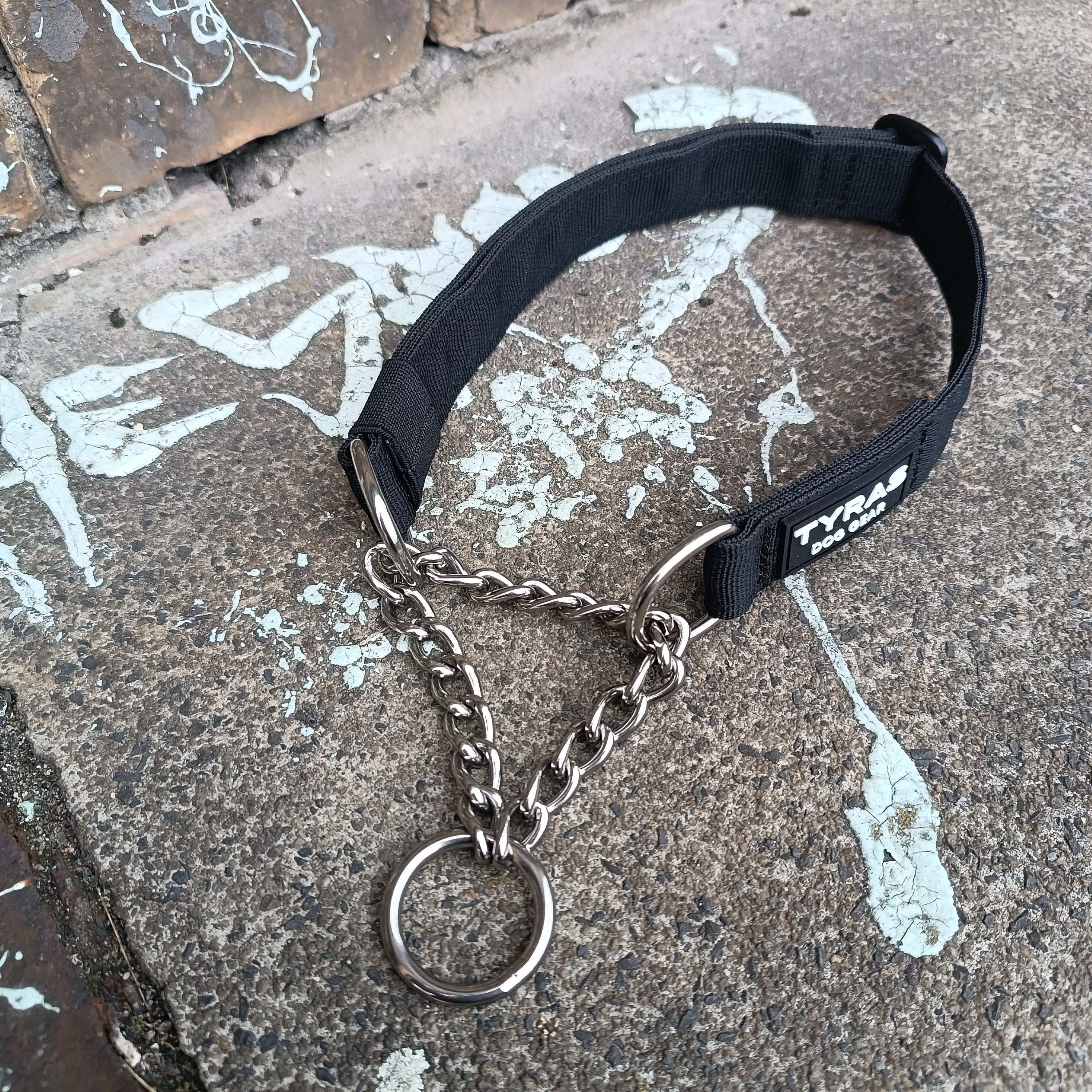
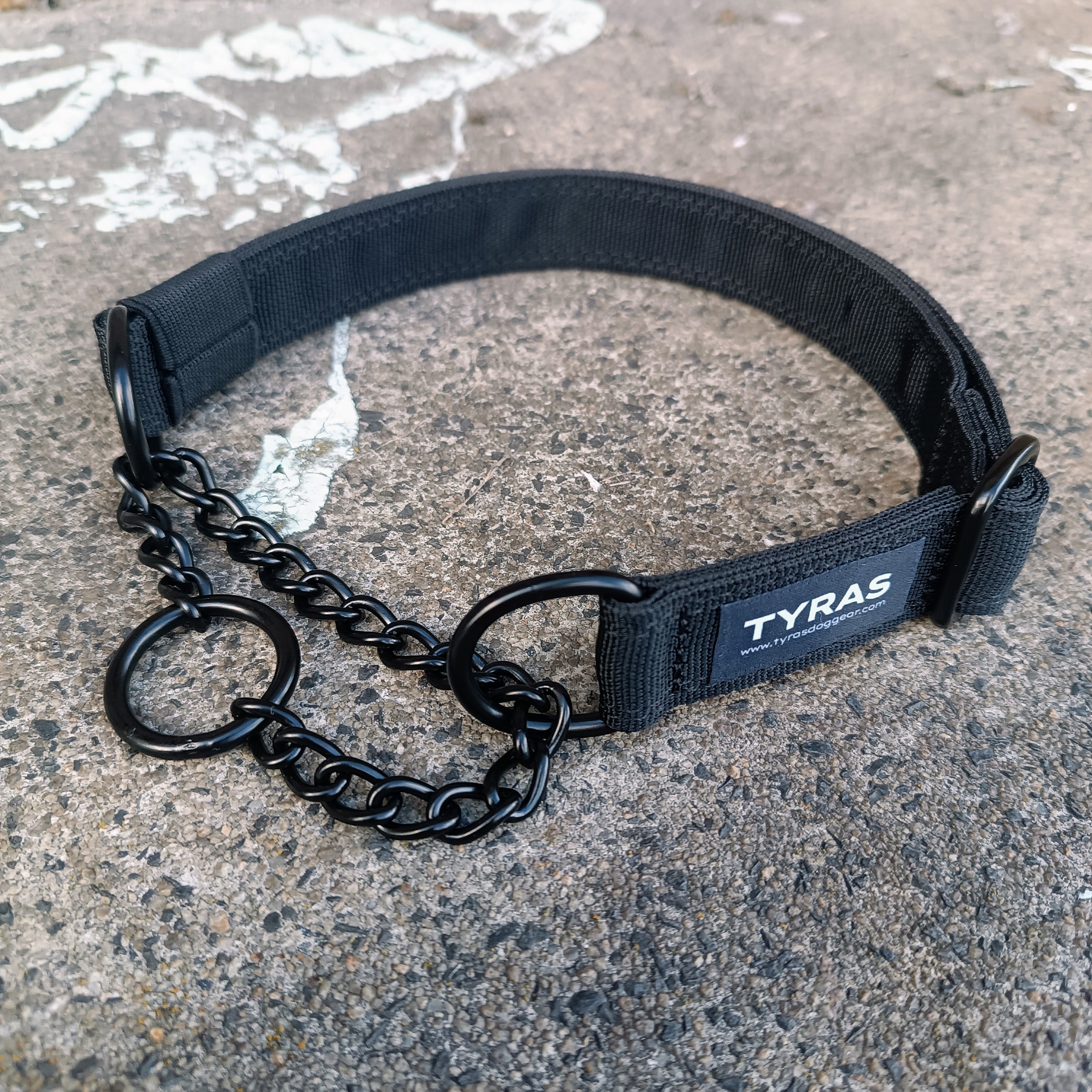
The models in our Gentle Control Chain series combine ultra-robust webbing with a heavy-duty chain in the loop section. This ensures an extremely fast, mechanical response and instant relaxation of the collar the moment tension on the leash is released.
- Gentle Control Chain 25: With a width of 25 mm, this model is an exceptionally lightweight, uncompromising all-rounder. Many handlers use it as a permanent daily companion – whether as a rock-solid mount for a GPS tracker or as a lightweight collar for home use. A true favorite for agile breeds like the Belgian Malinois.
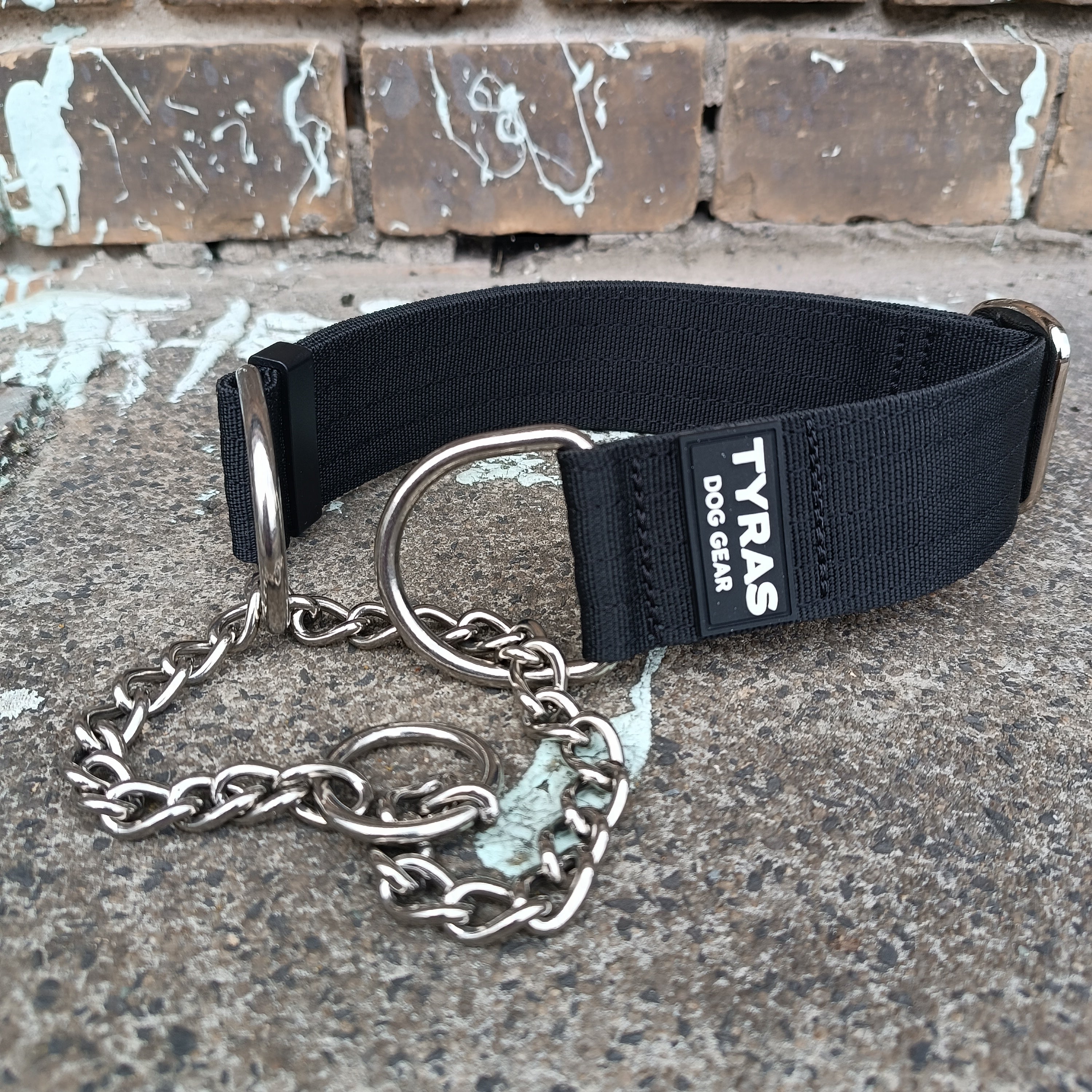
- Gentle Control Chain 40: Featuring a 40 mm width and an extended 15 cm loop section, this model is specifically engineered for powerful breeds with large neck circumferences and thick coats – such as Bernese Mountain Dogs, Cane Corsos, or Rottweilers. The long chain provides the necessary clearance for easy donning and doffing, while the wide webbing optimally distributes the pulling forces.
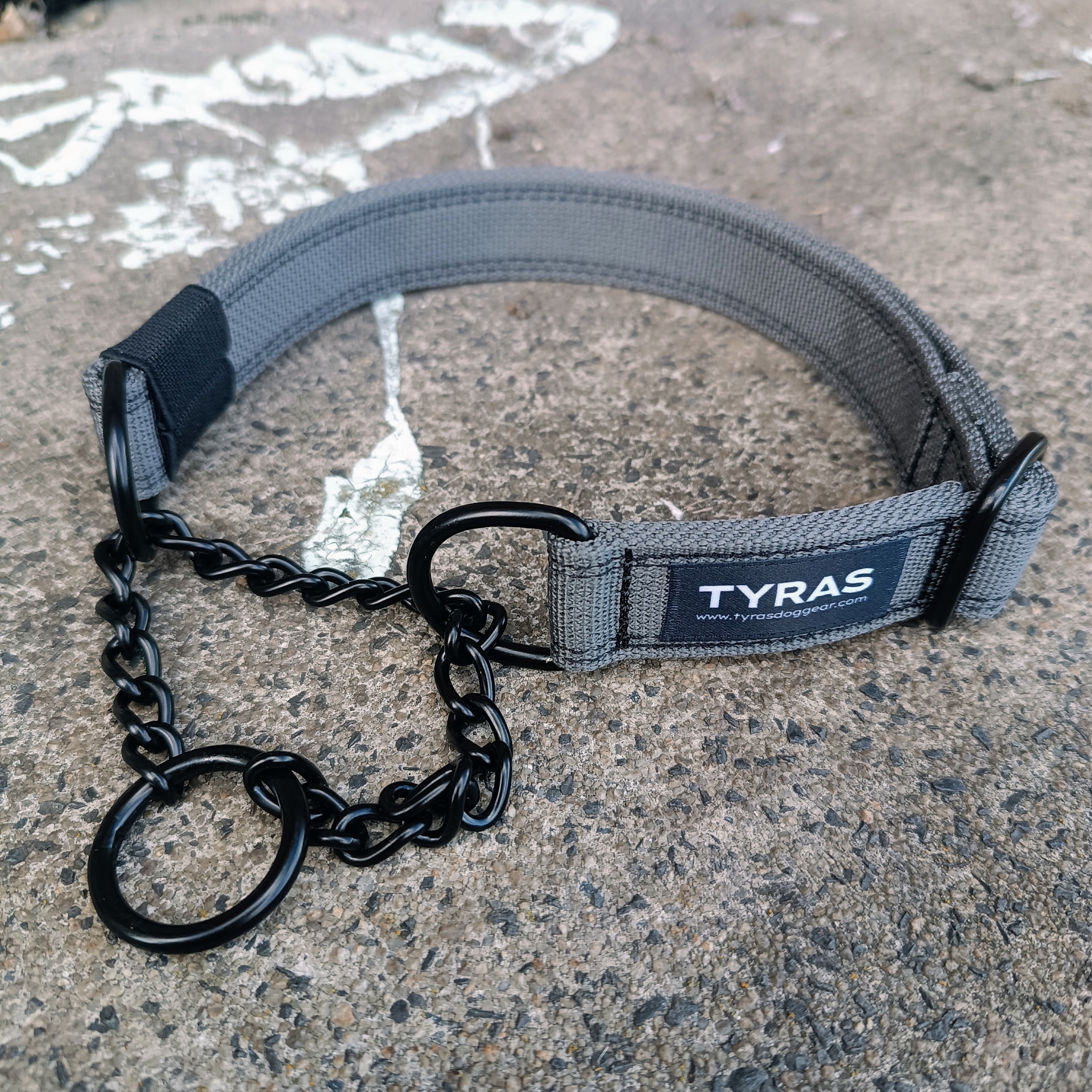
For those seeking an alternative completely free of chain components in the loop section, our all-webbing Martingales offer the ideal solution for direct handling. The Panta models feature a control loop made of webbing. Its length of 10 cm is calibrated so that the collar can be easily slipped over the head when putting it on, yet does not sit too loosely on the neck during work.
They are absolutely allowed. What is prohibited (among other regions, in Germany, Austria, and Switzerland) are pure choke chains without any limitation (i.e., full choke collars). Our TYRAS Martingale collars feature a fixed, mechanical stop. They can never close tighter than the dog's actual neck circumference. Therefore, they are compliant with animal welfare regulations, safe, and entirely legal.
For large dogs that put heavy pressure on the leash, two factors are critical: width and direct control. A wide collar optimally distributes the pressure over a large surface area, protecting the cervical spine and the larynx.
Important Note: Martingale collars are by no means training collars! They do not replace consistent dog education or active work on proper loose-leash walking.
Contrary to certain erroneous claims, these Martingale collars are not designed to allow children or teenagers to walk large-breed dogs over which they have no physical control. We consider such assumptions to be extremely dangerous for both humans and dogs. Experience shows that total control – especially over a powerful dog – is achieved through a built-up relationship, dedication, and training, not through physical tools alone.
Yes, many veterinarians and canine chiropractors prefer properly adjusted half-choke collars over classic buckle collars. Because they rest very loosely on the neck when tension is absent, they exert no continuous pressure on the trachea or the cervical vertebrae during daily wear. When tension occurs, the mechanical stop ensures that the pressure is absorbed evenly across the width of the webbing instead of crushing the larynx punctually.